


1. 3M Peltor Optime I — the pair we’d buy
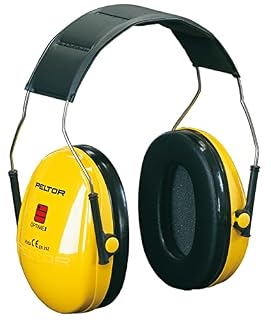
3M Australia publishes a technical data sheet for this muff. That document is why it heads the page. The sheet names the model — H510A, the headband version — and gives it Class 5 with an SLC80 of 28dB, tested to AS/NZS 1270:2002 at an accredited laboratory. You can download it and read the attenuation figures yourself. The listing quotes SNR 27 instead, which is the European figure for the same muff, and we’ll come back to why that matters. Nothing else at this money came with a document we could pull up.
The comfort is the other half of it. 3M makes the sealing rings from a mix of liquid and foam, so they seal at a lower clamping pressure. The muff grips your head less hard for the same seal, and that’s what saves you the ache above the ears after a long stint. It’s light, too. 3M also sells replacement cushions for the Optime line, so when the foam goes hard and shiny you re-seal them instead of binning the muffs — and the seal is where the protection lives. Two things sit against it. It costs a good deal more than the Shield Right, and this version doesn’t fold; 3M makes a folding Optime I, but that’s a different model. Matt’s happy paying for the paperwork. Joel reckons it’s a fair whack of extra money for a document.
2. Shield Right Standard Yellow Earmuffs — the cheap folding pair
This is the budget pair, and it does the obvious things well. It folds at the hinge, small enough to live in the drawer under the bench. Double foam cups, a padded headband, bright yellow so you can spot it in a dark corner. The listing puts it at Class 5 with an SLC80 of 32dB, tested to AS/NZS 1270:2002, and quotes a StandardsMark licence number against that claim — the highest Australian figure on this page, sitting on the cheapest muff.
Half of that we could check, and you can too. StandardsMark licences sit on a public register you can search by number, and SMK40540 is on it: current against AS/NZS 1270:2002 until January 2027, held by Guangdong J&Y Industrial, who also hold Australian licences for eye protection and respirators. What the register doesn’t publish is the model list, and Shield Right has no data sheet of its own, so nothing public ties that licence to this muff or to the 32dB on it. That puts it ahead of a bare listing claim without reaching what 3M hands you. Joel’s case is the plain one: for a spare pair in the ute, or a second set for whoever’s helping, the price decides it. Matt won’t have these as the only muffs in the shed — he’d rather buy the figure that names the model.
What the numbers on the box mean
Three different ratings turn up on ear muffs, and none of them convert to each other. That’s the part that makes this category confusing, so it’s worth sorting out before you buy.
Australia and New Zealand use AS/NZS 1270, which gives a muff two things: an SLC80 figure and a class from 1 to 5. SLC80 stands for Sound Level Conversion, valid for 80% of wearers — the decibels of protection at least four wearers in five should get, which is a fairer promise than a single best-case number. NRR, the Noise Reduction Rating, is the American figure, and SNR, the Single Number Rating, is the European one. Both measure attenuation, both work inside their own systems, and both are worked out differently from SLC80 and from each other. 3M’s advice on the sheet linked above is short: use SLC80 when you’re choosing.
The class is the shortcut, and it’s keyed to the 8-hour average noise you’re exposed to, measured in dB(A) — decibels weighted the way human hearing responds, so the reading tracks what your ears are getting rather than raw sound pressure. SafeWork NSW’s hearing PPE guidance sets out the table: Class 1 for an 8-hour average under 90dB(A), Class 2 for 90 to less than 95, Class 3 for 95 to less than 100, Class 4 for 100 to less than 105, and Class 5 for 105 to less than 110. Read it the right way round: the table tells you which class you need, and the muff’s own class comes off the box or the maker’s sheet. It’s also where the misreading happens — hearing a grinder scream and jumping straight to Class 5 skips the thing that sets the class, which is your average across the day and not the noise coming off the tool.
SafeWork is blunt about the American figure. Hearing protection rated by NRR “is not acceptable in Australia”, because the test behind it isn’t the test our standard asks for. Hold onto that while you shop, because a lot of what you’ll see listed here carries an NRR or an SNR and nothing else. That doesn’t make those muffs poor protection. They’re often the same model sold into another market, and the maker may hold Australian test data for them, the way 3M does for the Optime I. But a US or European number can’t be placed on the class table, and unless you go and find that data yourself you’re guessing.
Both of our picks are Class 5, which is worth saying plainly: on the numbers there’s very little between them. A 32 and a 28 land in the same class, and both are more muff than a home shed is likely to need.
The workplace trigger behind all of this is 85dB(A) averaged across eight hours, with the aim of getting what reaches the ear down to about 80dB(A). Nobody expects you to take a sound meter into your own shed. SafeWork’s guidance for construction sites is aimed at construction crews, but its rule of thumb travels: if you have to raise your voice to be heard, the noise is likely 85dB(A) or more. That’s when the muffs go on. The same page explains why none of this comes back — hazardous noise destroys the hair cells in your inner ear, and once they’re gone they never grow back.
More attenuation isn’t automatically better. SafeWork’s guidance warns against over-protecting, because a muff that cuts too much sound makes it hard to hear speech, instructions and warning noises, and it leaves you feeling cut off. For a sense of scale, WorkSafe Victoria puts hand-held angle grinders at about 90 to 115dB(A) and circular saws anywhere from 80 to 120dB(A), depending on the blade and the material. Those are levels while the tool is running. An hour of cutting on a Saturday doesn’t average out the same as a full shift of it.
So treat the extra attenuation as a trade. On your own in a shed, feeling cut off costs you little. If you’ve usually got someone else around, hearing them is worth something, and that’s an argument for the lower of the two figures on this page. If you’re picking an angle grinder, or working out whether you want a drill or an impact driver, both guides are worth a read — and the impact driver one covers how loud that tool gets.
Getting them to seal, and when muffs aren’t the answer
A rating is a laboratory number, and it assumes the cushion is sitting flat against your head all the way round. A poor seal is where the protection goes.
3M lists the usual culprits in the warning section of that same data sheet: safety glasses, goggles or respirator straps crossing the sealing surface, and hair or anything else caught under the cushion. Thin, flat glasses arms break the seal less than thick ones, which is a decent reason to buy your glasses and muffs with each other in mind. A cap brim pushing the band out of place does it too, and so does a headband stretched loose from years of being yanked on and off. Cushions matter as much — foam that’s gone hard, shiny or cracked has stopped sealing, whatever the sticker says. 3M’s own line is to change the hygiene kit about every six months. If yours are past it, replace the cushions or replace the muffs.
Muffs also aren’t the whole safety story on a noisy job. The dust usually arrives with the noise, and a grinder or a drop saw throws both at once. We’ve covered the P2 disposable masks worth keeping in the shed and, for longer or dirtier work, dust masks and respirators in more detail.
The verdict
Most people, most jobs: the 3M Peltor Optime I. It’s Class 5 with an SLC80 of 28dB on 3M Australia’s own data sheet, the low clamping pressure means you’ll keep them on through a long afternoon, and you can replace the cushions when the foam hardens. It’s the dearest pair here and it doesn’t fold, and we’d still buy it.
A cheap spare, or a second set for whoever’s helping: the Shield Right. It folds into a drawer, it undercuts the 3M by a long way, and the listing puts it at Class 5 with an SLC80 of 32dB. Go in knowing the maker’s AS/NZS licence checks out on the register, but doesn’t name this model.
Whichever way you go, put them somewhere you’ll reach for them without thinking — a hook by the bench, or the drawer under it. If it’s the cheap pair you’re buying, get two and leave a set wherever you’re likely to pick up something loud.