

The one number that matters: depth of cut
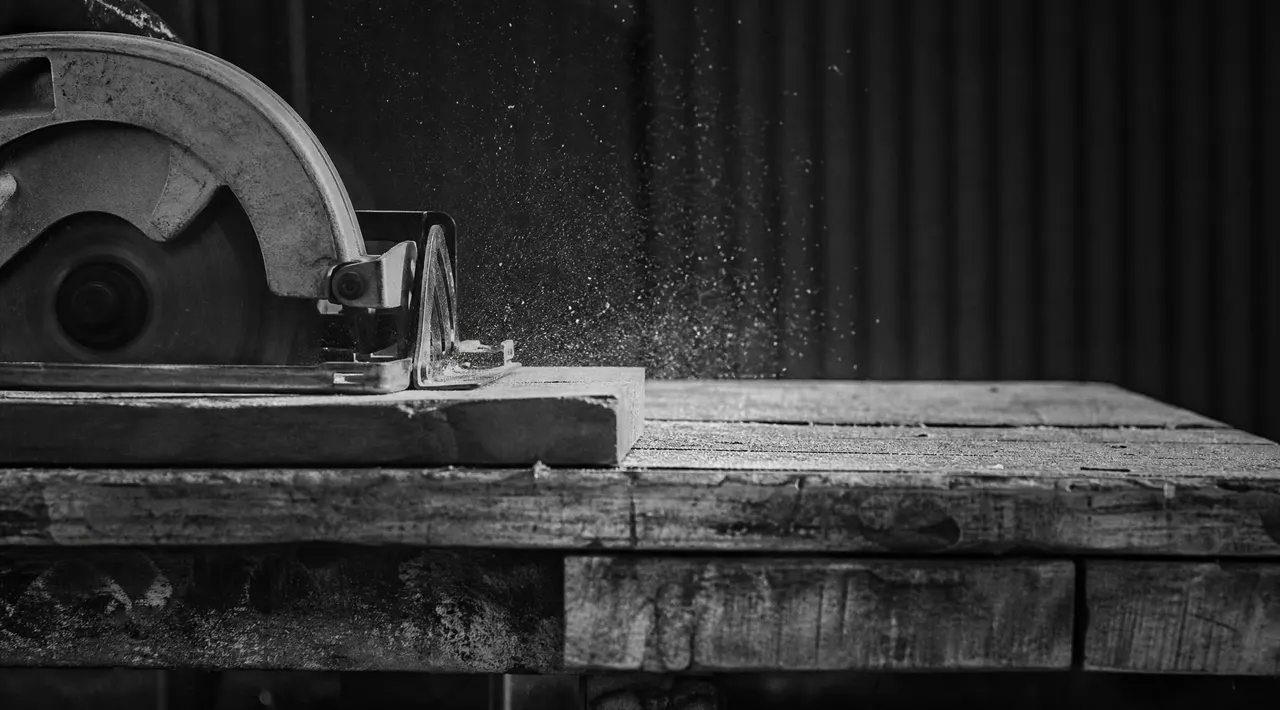
If you only read one section, read this one. The single most important spec on a circular saw is its depth of cut — how thick a piece of timber it can get through in one pass. Everything else is secondary.
Depth of cut is set by the blade diameter: a bigger blade reaches deeper. In Australia you’ll mostly see two sizes. 184mm (sometimes called 7¼-inch) is the standard for mains-powered saws and gives you around 60–66mm of cut depth — enough to get through 45mm framing pine in a single pass, even tilted over for an angled cut. 165mm (6½-inch) is common on cordless saws; it’s lighter and easier to control, but the cut depth drops to around 55mm.
That difference sounds small until you’re cutting decking or framing. 45mm pine on a 45-degree bevel needs more than 55mm of reach, so a 165mm saw will leave you finishing the cut by hand. If you’re doing structural work, buy the 184mm. If you’re cutting sheet goods and thinner stock, 165mm is lighter and perfectly capable.
Corded or cordless?
This used to be an easy question — corded for power, cordless for nipping out to the back fence. It’s closer now. A good brushless cordless saw will get through a day of framing on a couple of decent batteries, and you’re not hunting for a power point or dragging a lead through sawdust.
It comes down to this: if you already own a cordless platform, buy the saw that runs on your batteries. If you don’t, and you’re only cutting occasionally in the shed near a power point, a corded saw gives you more cut for less money and never goes flat.
What about the blade?
The blade that comes in the box is rarely the one you want for the job. Two things to look at:
Tooth count. A standard 184mm blade comes in anything from about 24 teeth to 60 teeth. Fewer teeth (24T) cut faster and rougher — good for ripping framing timber. More teeth (40–60T) cut slower and smoother — good for finish work and sheet material where you don’t want a chipped edge. Most people end up owning two blades and swapping them.
Arbor size. The arbor is the hole in the middle of the blade that fits the saw’s spindle. In Australia it’s usually 16mm or 20mm. It’s boring, but get it wrong and the blade won’t fit — check your saw’s manual before you buy blades.
The features worth having
- An electric brake stops the blade fast when you release the trigger. Once you’ve used one you won’t go back — it’s the difference between the blade stopping in a second and coasting for several.
- A depth scale and bevel scale that you can read and set at a glance. Cheap saws have vague scales; a clear one means when you set 32mm you get 32mm.
- A line-of-sight cut guide or a clear view of the blade against your pencil line. The straightness of your cut depends on it.
When to see a different tool
A circular saw cuts straight lines. For curves you want a jigsaw; for repeated identical angled cuts (like a deck frame or skirting) a mitre saw is faster and more accurate; for plunge cuts into the middle of a sheet a track saw is safer and cleaner. A circular saw will do a passable job of most of these in a pinch, but if a particular cut is most of your work, the right tool pays for itself.
What I’d buy
For most DIYers building decks, framing, or cutting sheet goods: a 184mm saw with a brushless motor and an electric brake, on whatever battery platform you’ve already committed to. Add a 40-tooth blade for clean cuts and keep the 24-tooth that came with it for rough work. That covers about everything a home project throws up — and the depth of cut means you’ll never be the bloke finishing a framing cut with a hand saw because his saw ran out of blade.
Whatever you buy, treat the safety basics as non-negotiable: let the blade reach full speed before it touches timber, keep both hands on the saw, and never reach under the workpiece. SafeWork NSW’s safety alert on hand-held cutting saws singles out kickback — the saw jumping back at you when the blade binds — as the injury to respect. It’s a brilliant tool and a properly dangerous one, and it doesn’t care which.