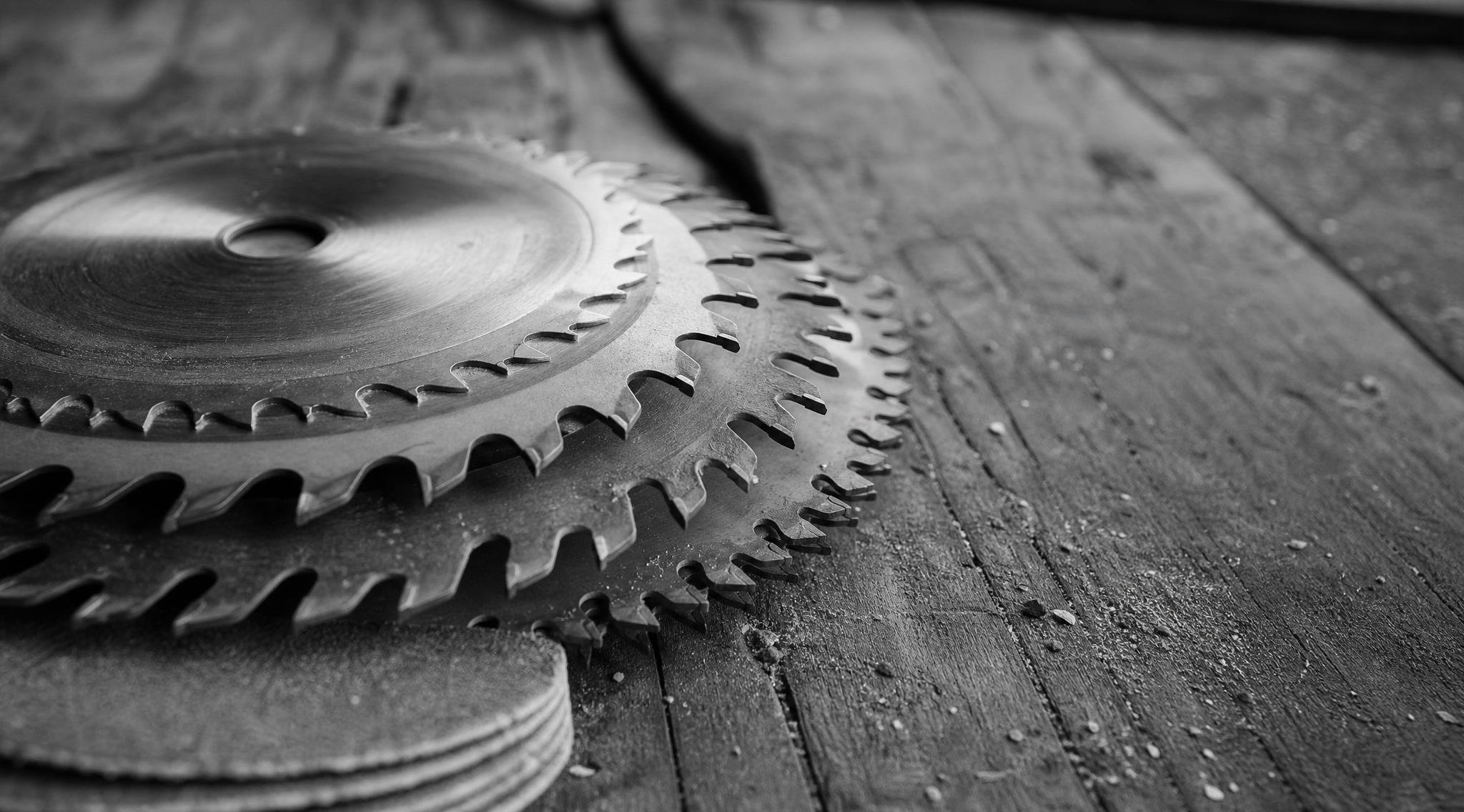


1. Bosch Cordless Wood 40T — the everyday blade
This is the blade to leave on the saw. Forty teeth is the middle of the range — enough to crosscut framing pine, structural ply and MDF with an edge that’s clean for most jobs, without dropping to the slow pace of a fine finish blade. Crosscutting means cutting across the grain — the cut you make most often. A mid-count blade handles it, and it rips (cuts along the grain) well enough that one blade covers a weekend’s work.
It’s a thin-kerf blade, and kerf is the width of the slot the blade cuts. A thinner slot means the saw removes less timber per pass, so the motor works less and a cordless battery lasts longer between charges — the reason Bosch builds this one for cordless saws. It’s the cheapest of the three and comes with two reduction rings, 10mm and 5/8”, that step the 20mm centre hole down to fit smaller-bore saws. Matt would keep a finish blade in the case as well. Joel’s point is that if you only own one blade, this is the one, and the money you save on it buys the spares. Fit it, cut most of what a DIY job throws up, and only swap when the cut needs to be cleaner or faster.
2. Makita Efficut 60T — clean cuts in sheet goods
When the cut face shows, tooth count is what saves you. Sixty teeth take a smaller bite each, so they leave far less tear-out — the splintering where the teeth exit the timber and lift the grain — on melamine, veneered ply and laminate. This is the blade for cabinet panels, shelving and anything painted or on show, where a rough edge from a coarse blade means sanding or filler afterwards.
Makita builds the Efficut with a thin 1.85mm kerf and a shallow tooth rake — rake is the angle the teeth lean into the cut — so it shears cleanly instead of tearing, and like the Bosch it’s easy on a cordless battery. It’s carbide-tipped (TCT, tungsten carbide tipped: hard tips brazed to a steel body that hold an edge far longer than plain steel) and rated to 9,250 rpm, which covers any 165mm cordless saw. The trade-off is speed — sixty teeth clear sawdust slower, so it bogs down in thick framing where the 40-tooth blade walks through. Matt keeps a high-tooth blade for cabinet work and rates the clean edge it leaves; Joel keeps it off the saw for rough framing so it stays sharp for the cuts that need it. For finish work it’s the best blade here; it just isn’t the one you rip studs with.
3. Bosch Speedline 24T — fast rip and framing
Fewer teeth, bigger gullets, faster cut. Twenty-four teeth with deep gullets — the gaps between the teeth that carry sawdust out of the cut — clear waste quickly, so this blade powers through framing pine, studs and formwork ply where speed matters and the edge doesn’t. It’s the blade for demolition, deck substructure and rough carpentry: the cuts you make fast and then cover up.
A coarse blade leaves a rougher edge and more tear-out than the two above, which is the deal you take for the speed — so never reach for this one on a finished surface. It’s a thin-kerf 24-tooth blade on the standard 20mm bore, carbide-tipped like the others, so it seats on any 20mm-bore 165mm saw. Joel likes a coarse blade on the saw for a demo day because it chews through nail-free timber without stalling the motor or draining the battery on every cut. Matt’s caution is to check for hidden nails and screws first — a general wood blade isn’t built to survive metal, and a tooth chipped on a buried nail is a blade retired early. For fast, rough cutting it’s the cheapest way to keep your good blades out of the dirty work.
Getting a blade that fits your saw
Two measurements decide whether a blade fits, and getting either wrong means it goes straight back in the box. Start with diameter — the width of the blade. A 165mm saw is built around a 165mm blade: the guard wraps it and the depth stops are set for it, so a bigger blade won’t sit under the guard and a smaller one loses you cutting depth. Read the size printed on the blade you’re replacing, or the plate on the saw. Plenty of saws are 184mm (7-1/4”) or smaller instead, and the diameter has to match.
After that, the bore — the hole in the middle that locates on the saw’s spindle. Most Australian cordless saws run a 20mm bore, which is what all three blades here use, so they seat with the standard washers and the spindle lock holds them while you tighten. A handful of saws take a 10mm bore; the Bosch 40-tooth blade ships with reduction rings that drop 20mm to 10mm, so that’s the one to grab if yours is a 10mm saw. Match the diameter and the bore and swapping a blade is a one-spanner, one-minute job. Haven’t settled on the saw yet? Our circular saw guide and cordless saw comparison walk you through it.
Is there a warranty on a saw blade?
A saw blade doesn’t carry a warranty worth chasing, and that’s normal for what it is. It sits in the same class as a drill bit or a sanding disc — you buy it to wear it out, so a blade that’s gone blunt after a stack of cuts has done its job, not failed. The line worth knowing is a blade that’s faulty on arrival: cracked, warped enough to wobble on the spindle, or dropping a carbide tip on a clean cut it should have shrugged off. That’s a defect rather than fair wear, and under the ACCC’s consumer guarantees a faulty product may entitle you to a repair, replacement or refund — reason enough to hang on to the receipt. Worth saying once for all three: cutting timber, MDF and treated pine kicks up fine dust that’s bad to breathe, so run a mask and eye protection, and leave the saw’s guard doing its job.
The verdict
You want one blade for a cordless saw: the Bosch 40-tooth. It crosscuts and rips most timber cleanly enough, it’s thin-kerf so the battery goes further, and it’s the cheapest of the three — buy it first and add the others when a job needs them.
You’re cutting cabinet panels, melamine or veneered ply: the Makita Efficut 60-tooth. Sixty teeth leave the cleanest edge here, which saves you sanding or filling a face that’s going to show.
You’re framing, ripping studs or doing demo work: the Bosch Speedline 24-tooth. It cuts fast and cheap where the edge gets covered, and it keeps your finer blades out of the dirty, nail-risky work.
The 40-tooth earns the spot on the saw; the other two live in the case and come out for the job that suits them. Read the cut before you fit a blade — rough and fast, or clean and slow — get the diameter and bore right for your saw, and a single 165mm cordless saw will frame, rip and finish. You just change the blade to suit the cut.