



1. Makita DGA504 — the one most DIYers should buy
If you want one grinder to cover the home shed for years, start with the DGA504 — and what earns it the spot is the safety tech packed behind the guard, which counts for more here than the power rating on the label. It’s rated for kickback detection: the tool senses the disc snagging and cuts power before the grinder can buck out of your hands. It adds anti-restart too, so it won’t leap into life if the battery goes in while the switch is still on. A soft start eases the disc up to its 8,500rpm no-load speed (rpm is just how fast the disc spins with nothing touching it) instead of jerking your wrist on the trigger. None of that shows up in a shop-floor demo, and all of it earns its keep the day a cut goes wrong.
It’s the better tool on grunt, too. An automatic torque drive lifts the power when the disc loads up in a cut, and an electronic current limiter backs the motor off before it cooks. The catch that keeps it from a clean sweep is the slide switch: you push it on and it stays on, which is one less thing to fumble mid-cut but also means the disc keeps spinning if you lose your grip. The DGA504 is a skin, so the price you see buys the tool alone — but it drops onto the LXT range, past 300 tools sharing the one battery, which is the platform we lay out in full in the platform comparison. (Matt: I run LXT and I’d still rate this on the safety list alone. The kickback sensor is the feature you hope never to need and are grateful for once.)
2. Milwaukee M18 FAG125 — the safety-first pick, and the paddle that stops it dead
It lands a whisker behind the Makita, and on pure safety it might be the best-protected grinder here. It runs a paddle switch — the dead-man kind you squeeze to run that stops the disc the instant you let go. Drop the grinder, lose your grip, snag a cut and pull back, and the paddle releases and the wheel winds down, where the Makita’s slide switch would keep it turning. Milwaukee backs that with a RAPIDSTOP brake that pulls the disc up in under two seconds and an electronic clutch that cuts the motor when it senses a jam. So it has the paddle switch the Makita doesn’t, plus the same kickback protection the Makita has — the more complete safety kit of the two.
It’s brushless like the others, with a tool-less guard you can swing around without hunting for a spanner — the small stuff that stops you grinding one-handed at an awkward angle. What holds it at second rather than first is the wider picture: it’s the dearest skin here by a clear margin, and it’s a professional M18 FUEL tool, more grinder than a weekend shed will ever stretch. The flip side is a five-year warranty that needs no registration — though, like the Makita, it only holds on stock from an authorised Australian dealer — plus a spot on the deep M18 trade range we lay out in the platform comparison. If you’re already on M18, or safety is the line you won’t move on, this is the one. (Matt: I run M18 at the heavy end, so I’ll declare the bias — but the paddle and brake together make the safety case — it isn’t about the Milwaukee name. If a grinder makes you flinch, the one that stops the moment you release earns the extra outlay.)
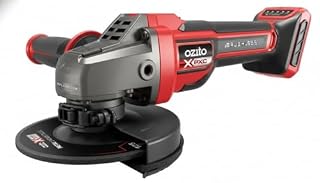
3. Ozito PXC Brushless — plenty of grinder for occasional money
If a grinder is a tool you’ll reach for a few weekends a year, the Ozito makes a strong case on price alone. It’s brushless — which used to be a feature you paid up for and now sits on the cheapest skin here — with an overload alert that flags when you’re leaning too hard, adjustable speed for matching the disc to the work, and a small display reading out the rpm. For cutting the odd bolt, grinding a rough edge or stripping a patch of rust, that’s enough tool, and it’s roughly half the all-in cost of the Makita once you count the battery each one needs.
The gap is the safety list. Ozito covers the overload side, but it doesn’t advertise the kickback sensor or anti-restart that the Makita carries or the paddle switch and brake the Milwaukee does, so more of staying safe falls back on the guard, the right disc and your own habits. The PXC range is also the shallowest of the three — fine if the grinder is a one-off, less of a draw if you’re picking a platform to grow. It earns its place on price, and you take on a bit more of the safety yourself — go in knowing that and it does the job it’s bought for. (Joel: this is the one I’d hand someone who needs to cut four star pickets on Saturday and doesn’t want a second platform in the shed. For that job, it’s plenty.)
Safety, batteries and the warranty fine print
Whichever you pick, the guard and the right disc keep you safer than any badge — SafeWork’s abrasive-wheels fact sheet is two minutes well spent before your first cut, and the short version is to run the guard the maker supplied and only ever fit a disc rated for the tool’s size and speed. Glasses and ear protection aren’t optional with a grinder either.
Every price here is a skin price, so the sticker isn’t the spend: you’ll add a battery and charger before the grinder turns, and that’s where a cheaper-looking tool on a pricier platform can end up costing more. Work out the total on the battery family you’ll keep buying into, not the tag on the shelf. The warranties differ in what they ask of you. Makita’s cover runs five years on the skin if you register at MyMakita within 30 days, three if you don’t — but that only holds on genuine Australian stock bought through an authorised dealer, so a grey-import or third-party-marketplace listing can carry no Makita warranty at all. Check who’s selling before you count on it. Milwaukee’s M18 FUEL cover runs five years with no registration, but it’s the strictest of the three on where you buy: Milwaukee says the manufacturer warranty doesn’t apply to marketplace or other non-authorised-retailer purchases, so on the listing we link you’re leaning on your consumer-law rights, not the five years. Ozito backs its Power X Change tools with a five-year replacement warranty that needs no registration, though a claim wants your receipt from the official retailer. On any of them, Australian Consumer Law may also entitle you to a repair, replacement or refund, whoever sold it. New to grinders entirely? Start with how to choose an angle grinder and come back.
The verdict
You want one grinder that’s safe and lasts: the Makita DGA504. The kickback sensor, anti-restart and soft start are the safety package none of the others fully match, the brushless motor and torque control make it the better tool in a long cut, and LXT is the deepest platform to grow into. The slide switch is the trade-off, and for most people it’s the right one.
You want the most guarding, or you’re already on M18: the Milwaukee M18 FAG125. The deadman paddle stops the disc the moment you let go, the RAPIDSTOP brake pulls it up in under two seconds, and an electronic clutch watches for kickback — the most complete safety kit here. It’s the priciest by a margin and it’s pro-grade, which is all that keeps it from the top for a home shed.
The grinder’s an occasional tool and budget rules: the Ozito PXC. Brushless and overload-protected for occasional-job money, marked down only for the thinner safety list and the shallower range — buy it knowing what it is and it won’t let you down on the jobs it’s for.
Three grinders that’ll all make the cut. Decide how much built-in safety you want behind the guard, then settle on the platform you’re happy to keep feeding.