
Where this driver sits
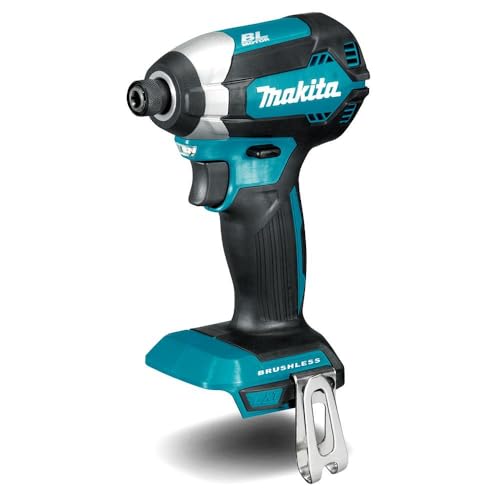
I run Ryobi, and Matt will tell anyone who stands still long enough that I only do it to annoy him. So it costs me something to say this: if you’re buying an impact driver and you’ve landed on the Makita platform, the DTD153 is the one to get. I went looking for a reason to point you at the cheaper option, the way I usually can, and on this tool I couldn’t find one that holds up.
Here’s where it sits. It’s the brushless impact driver in the middle of Makita’s 18V range — a clear step up from the brushed entry models, and below the multi-mode DTD171 with its assist settings most of us never touch. The middle is where you want to be shopping, because it’s the one that does the job without you paying for tricks you’ll forget you own.
One bit of admin before you get excited, because it’s dull and it’s easy to lose: Makita’s warranty runs five years if you register the tool at MyMakita within 30 days of buying it, three if you don’t — and only on genuine Australian stock from an authorised dealer, so a grey-import “plain packaging” listing may carry no Makita cover at all. Do it the night it lands on the bench. I’m the one who forgot to register a tool once and found out the hard way the cover wasn’t there when I needed it, so take that as a warning from someone who’s paid for the lesson.
How much grunt does it have?
The headline is 170Nm of torque. Torque is grunt — twisting force — and 170Nm is a big serve of it, more than most cordless drills will ever give you. It walks long batten screws into framing pine, drives coach bolts up tight, and doesn’t bog down and leave a screw standing proud the way an underpowered tool does.
The trick that does it is the impact part. Lean on a normal drill and it just twists harder in your wrist until the screw stalls or the head strips. An impact driver instead fires off quick hammer blows in the direction you’re turning — rated for up to 3,600 of them a minute — so the screw keeps moving and your wrist doesn’t cop the kickback. You feel it the first time a long screw that would’ve stopped a drill dead just keeps winding down.
Then there’s the motor, and this is where the extra money goes. It’s brushless, which is the newer design with no little carbon blocks rubbing on the spinning part to wear out and rob power. A brushless motor runs cooler, squeezes more work out of each charge, and lasts years longer than the brushed motors in the budget drivers. On a tool you’ll keep for a decade, that’s the part worth paying for.
What’s it like to use?
Small, and that’s most of the point. At 126mm nose to tail it gets into the back corner of a kitchen cabinet where a longer tool jams against the side, and at 0.9kg before the battery it’s light enough to hold up under a deck frame without your arm giving out by smoko. The first afternoon I spent with a short driver like this, going back to a long one felt like swinging a brick.
The chuck is a one-touch sliding sleeve. You pull the collar forward, the bit drops in or out, and you’re swapping driver bits one-handed — which you’ll be glad of the third time you’re up the ladder with a screw in the other hand. There’s an electric brake too: let off the trigger and the bit stops dead instead of spinning down on its own, so you’re not waiting on it before you reposition. And the LED throws light right where the bit meets the screw, which sounds like a small thing until you’re driving screws into the dark side of a wall unit.
The one honest catch is the noise. It’s loud, the way every impact driver ever built is loud — that hammering racket is the mechanism doing its job, not a fault. Your ears and the bloke over the back fence will both know the second you pull the trigger, so a set of earmuffs lives next to it. We’ve compared the ear muffs worth buying for shed work if you’re starting from nothing.
What does buying it commit you to?
More than a driver. Buying the DTD153 is buying into LXT — north of 250 tools that all run off the same battery — so every Makita tool you add after this one costs you less than its ticket price, because you already own the dear part. That’s the whole argument for paying the Makita premium over my Ryobi or the Ozito version, and it’s a decision you’d rather get right once. Matt and I have laid out the full sums — what the batteries cost, who’s got the best warranty, where each platform earns its keep — in our battery platform comparison, and I’d read it before you spend a cent.
If you’ve already got the matching Makita DHP484 drill, this is the natural second tool — the drill bores the holes and drives the fiddly stuff on the clutch, the impact driver handles the long screws and bolts that make a drill struggle.
Should you buy it?
Buy it if you’re on Makita and you drive a lot of screws — decks, framing, fences, anything with bolts — because this is the tool that makes that work quick and stops chewing up the heads. The 8.6 is me being straight: it’s a cracking driver, but it’s skin only, it sticks to one impact mode, and you’re paying Makita money for the privilege.
If your DIY is the odd flat-pack and a couple of shelves a year, you don’t need this and I won’t pretend you do — the Ozito PXC end of the aisle drives screws fine for a fraction of the spend, and that’s a real steer. But if you’re building things most weekends and you’ve thrown in with Makita, this is the impact driver I’d put in your hand, and I say that as the brother who’d rather it were a Ryobi.
Specifications
- Voltage
- 18V (LXT platform)
- Max torque
- 170Nm
- No-load speed
- 0–3,400 rpm
- Impact rate
- 0–3,600 ipm (impacts per minute)
- Chuck
- 6.35mm (1/4 inch) one-touch hex
- Motor
- Brushless
- Length
- 126mm
- Weight
- 0.9kg (skin, no battery)
- Warranty
- 5 years (registered)