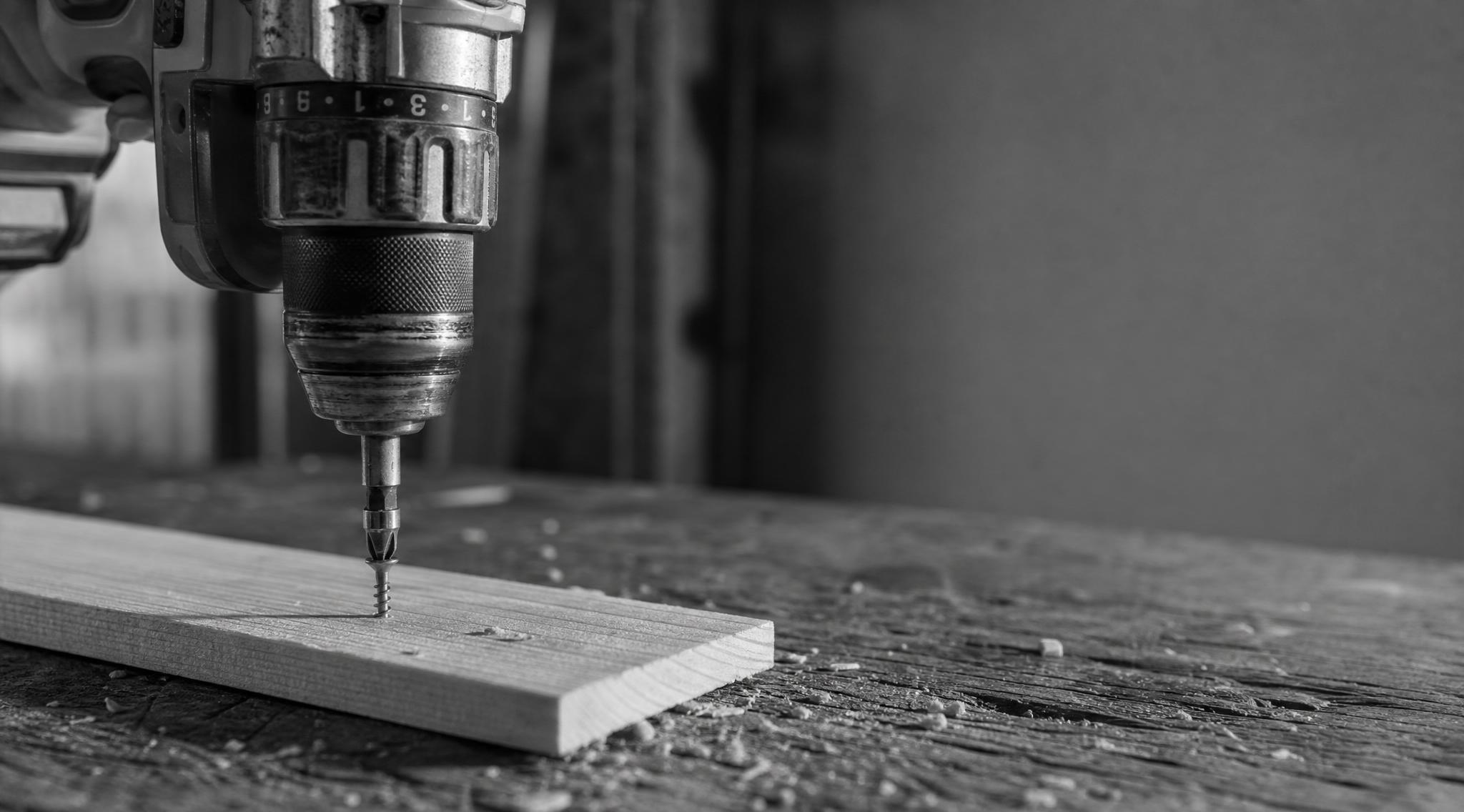


How much drill you get
When people ask me what drill to buy — and being the brother who renovates things, I get asked a lot — this is the one I point them at. The R18PD3 is Ryobi’s compact percussion drill (percussion is just Ryobi’s word for hammer mode), and it costs roughly half what the Makita DHP484 that Matt and I both rate as the benchmark does. So the whole review comes down to a single question: what does spending double get you, and are you ever going to feel the difference?
For most houses, the answer is “not a lot, and probably not.” This drill drives screws, bores holes and gets plugs into brick — which, when I sit down and think about it, is every single job my own place in Traralgon has thrown at me in a year of weekends. The dearer Makita does all of that too. It just does it for twice the money and a slightly nicer feel in the hand.
How much power does it have?
It’s 50Nm of torque — that’s twisting force, the spec that decides whether a long screw winds home or the drill gives up and stalls halfway — against the Makita’s 54Nm. On paper that’s close, and in the soft framing pine most of us are cutting, you won’t pick the gap. Where the two part ways is the motor: this Ryobi is brushed, the older design with little carbon blocks rubbing against the spinning part to feed it power, while the Makita is brushless. Brushed motors run hotter, get through a battery quicker and don’t last as long — and that, more than any single number, is what the lower price is buying you. For a drill that works Saturdays instead of weekdays, I’ll take that trade and not look back.
The clutch is the bit I didn’t expect to like as much as I do. It’s the numbered collar that tells the drill to stop turning once a screw’s snug, and this one has 24 settings with finer steps at the gentle end than even the pricier Makita gives you. Flat-pack furniture and cabinet hinges are exactly where a cheap drill chews the head clean off a screw — ask me how I know — and this one just doesn’t.
What’s it like to use?
The compact body is shorter than the drill it replaced, so it gets into the back of a cupboard or between two studs without a wrestle. The detail I’d point out at this price is the chuck — the bit that grips the drill bit — which is a proper ratchet-locking metal one, not the plastic kind that most budget drills come with and that slowly works itself loose halfway through a job. The two-speed gearbox keeps a low range for driving screws and a high one for drilling, and the hammer mode does its one job — wall plugs into brick — without fuss. A whole wall of masonry anchors is rotary-hammer work, but that’s true of the Makita sitting next to it too, so it’s not a mark against this one.
What does buying it commit you to?
The One+ platform, and that cuts both ways. The good way: every One+ battery Ryobi has made since 1996 fits this drill, the range is past 300 tools, and the warranty runs to six years — four as standard, two more if you register within 30 days of buying it. Do that registration the night it arrives, because two free years is a daft thing to leave on the table, and I’ve left it on the table before. The catch is the flip side of the same coin: once you’re on green, you tend to stay on green. I’ve laid out exactly what that’s worth, and what it costs, in the platform guide.
Should you buy it?
Buy it if your drill spends most of its life in a cupboard and comes out for jobs rather than for a living — which is to say, buy it if you’re most people. You give up a bit of runtime, a few Nm and that last touch of trade-tool polish; in return you keep a decent wad of cash and you’re in the biggest tool ecosystem going. If your projects are getting more serious every year and you can feel it, read the Makita review before you decide — Matt makes a fair case. And if even this sounds like more drill than your life calls for, the budget end of the platform comparison will sort you out for less again.
Specifications
- Voltage
- 18V (One+ platform)
- Max torque
- 50Nm
- Chuck
- 13mm ratchet-locking, keyless
- Speed
- 0–500 / 0–1,800 rpm (2-speed gearbox)
- Clutch
- 24 settings
- Sold as
- Skin only — battery and charger extra